看世界 | 世界最大海上液化天然气接收站试运行
2023年5月22日
发布者:KnowMi 发布时间: 2026-01-28 01:01:44 点击量: 842 来源:
05 22
世界最大海上液化天然气接收站试运行
World's largest offshore LNG terminal launches trial operations
来源:中国海油
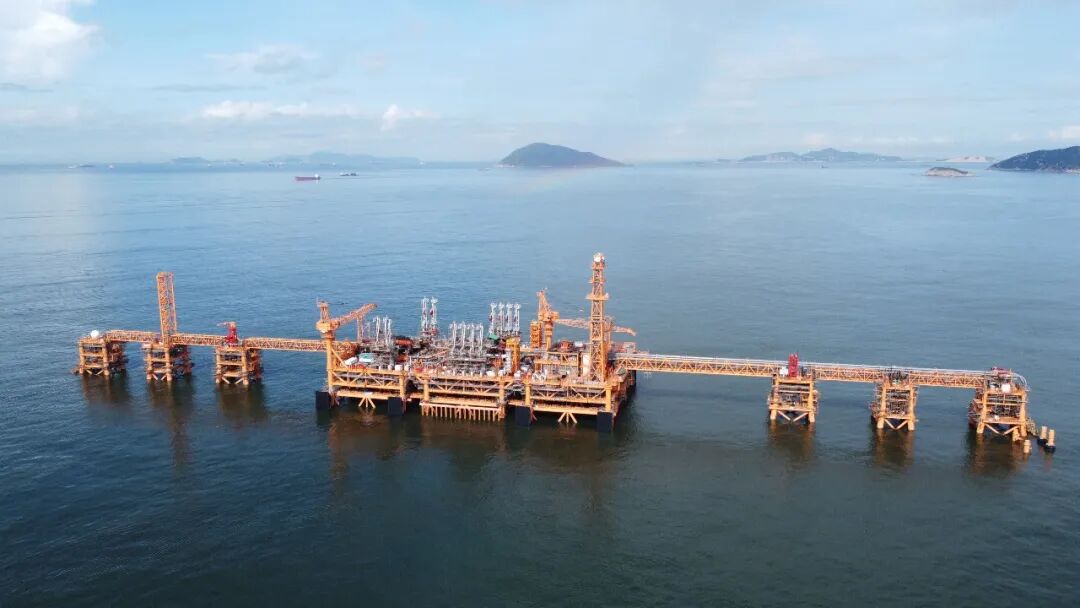
中国海洋石油集团有限公司(CNOOC)于5月14日表示,世界最大的海上液化天然气接收站——香港LNG(液化天然气)项目已进入试运行阶段。该项目主要包括一座导管架形式的双泊位海上LNG接收站码头、一座陆地LNG接收站和两条海底管道。项目建成后,将大幅提高香港清洁能源发电比例。其LNG接收站码头可供两艘全球最大的FSRU(浮式储存再气化装置)或LNG运输船同时停泊作业。香港LNG总包项目副总经理刘志刚介绍,码头设计使用年限为50年,为常规海上液化天然气接收站的2倍以上,并能经受每年490万次、每次最大2400吨的船舶靠泊撞击力。
A Hong Kong liquefied natural gas (LNG) receiving and offtake terminal, the world's largest offshore LNG terminal, has entered trial operation, said the China National Offshore Oil Corporation (CNOOC) on Sunday. The two-berth offshore terminal, plus a land-based LNG terminal and two submarine pipelines, belongs to the Hong Kong LNG project. Once completed, the project will increase the share of clean energy in the region's electricity production. The terminal is capable of berthing two of the world's largest floating storage and regasification units or LNG carriers simultaneously. The designed service life of the terminal is 50 years, which is more than twice as long as the conventional offshore LNG ones, and can withstand the impact force of 4.9 million ships berthing annually with a maximum of 2,400 tonnes each time, said Liu Zhigang, deputy general manager at CNOOC Hong Kong LNG Project.
BIMCO:全球拆船业将在2032年迎来历史高点
Ship recycling set to boom through 2032, says BIMCO
来源:BIMCO
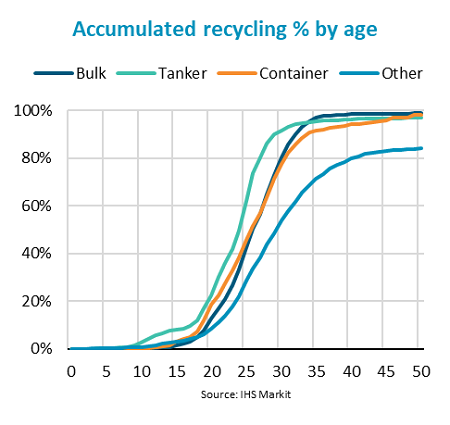
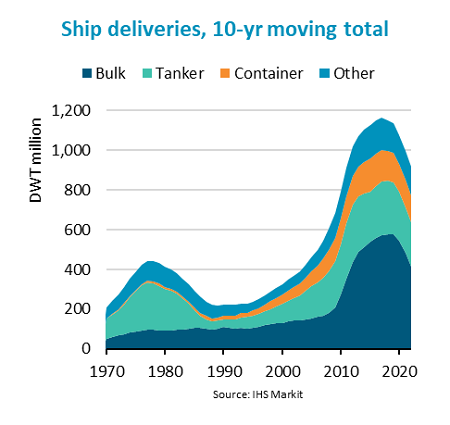
从历史上看,当船龄达到25年时,约占总载重吨50%的散货船、油船和集装箱船就会被拆解,当船龄达到30-35年时,这一数字会上升到90%。根据波罗的海国际航运公会(BIMCO)的预测,按照以上的拆船市场规律,在2023-2032年期间将有15,000艘船舶被拆解(约合6亿载重吨),这比过去十年拆船量的两倍还要多。对此,BIMCO首席航运分析师Niels Rasmussen表示:“事实上,电弧炉熔炼钢铁所排放的温室气体远远少于粗钢生产,且伴随着电网的脱碳,温室气体排放量还将进一步减少。”因此,拆船能够持续在循环经济中发挥关键作用。在过去10年中,共计有7,780艘(约2.85亿载重吨)的船舶被拆解,其中60%的船舶是二十世纪九十年代建造的。预计在接下来的十年中,二十一世纪首个十年间建造的船舶将成为主要的拆解对象。
Historically about 50% of bulk, tanker, and container deadweight capacity has been recycled by the time the ships would have been 25 years old and 90% by 30-35 years old. If we apply this recycling pattern to the currently trading ships, we estimate that 15,000 ships and 600 million deadweight tonnes will be recycled between 2023 and 2032,more than twice the amount recycled in the previous ten years. “In fact, recycling steel in electric arc furnaces emits significantly less greenhouse gases than the production of crude steel, and as the electricity grid becomes decarbonized emissions will reduce further. Therefore, ship recycling can continue to play a key role in the circular economy,” says Rasmussen, Chief Shipping Analyst at BIMCO. Over the past 10 years, 7,780 ships with a deadweight capacity of 285 million tonnes were recycled. Most of the deadweight capacity recycled (60%) was built during the 1990s. In the next ten years, ships built during the 2000s will be the main source of recycling.
东太平洋航运向江南造船订购全球最大氨运输船
EPS, Jiangnan ink deal for construction of world’s largest ammonia carriers
来源:江南造船
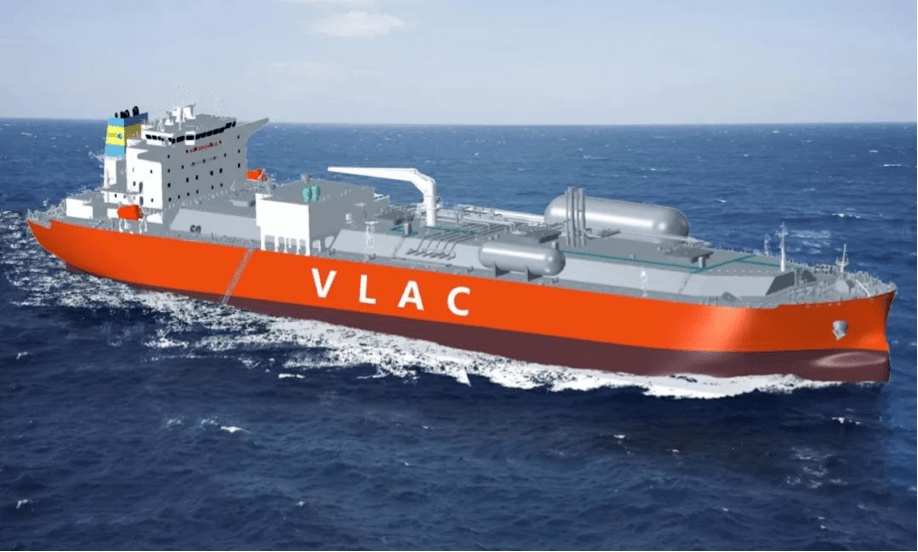
中国船舶集团(CSSC)旗下的江南造船(集团)与新加坡航运公司东太平洋航运(EPS)签署了4艘93000立方米超大型液氨运输船(VLAC)的建造合同。该型船舶是由江南造船自主研发设计的第四代超大型液化气运输船(VLGC)精品船型的衍生型——Panda 93A。江南造船表示,作为目前世界上最大的液氨运输船,这些船将成为绿氨长途运输的首选。此外,它们也可以装载包括丙烷和丁烷等在内的液化石油气(LPG)。值得一提的是,在设计过程中,考虑到液氨较常规液化石油气的密度大,江南造船对其液货舱进行了特别加强,使该型船在满载、压载和不同比重的液货装载工况下都能有出色、均衡的性能表现。
Jiangnan Shipbuilding, a subsidiary of China State Shipbuilding Corporation (CSSC), has signed a contract with Singaporean shipping company Eastern Pacific Shipping (EPS) for the construction of four Very Large Ammonia Carriers (VLAC) with a capacity of 93,000 cubic meters. The 93,000 cubic meter VLAC design, known as the Panda 93A, is derived from the fourth-generation VLGC model developed and designed by Jiangnan. The Chinese shipbuilder said that based on their capacity these will be the largest ammonia carriers in the world. This type of vessel is the preferred option for transporting green ammonia over long distances, but it can also be fully loaded with liquefied petroleum gases, such as propane and butane. In the design of this ship, special attention has been given to the tank design considering that liquid ammonia has a higher density compared to conventional liquefied petroleum gas. The liquid tank has been reinforced to accommodate this difference, ensuring balanced performance during liquid cargo loading with varying specific gravities, the shipbuilder said.
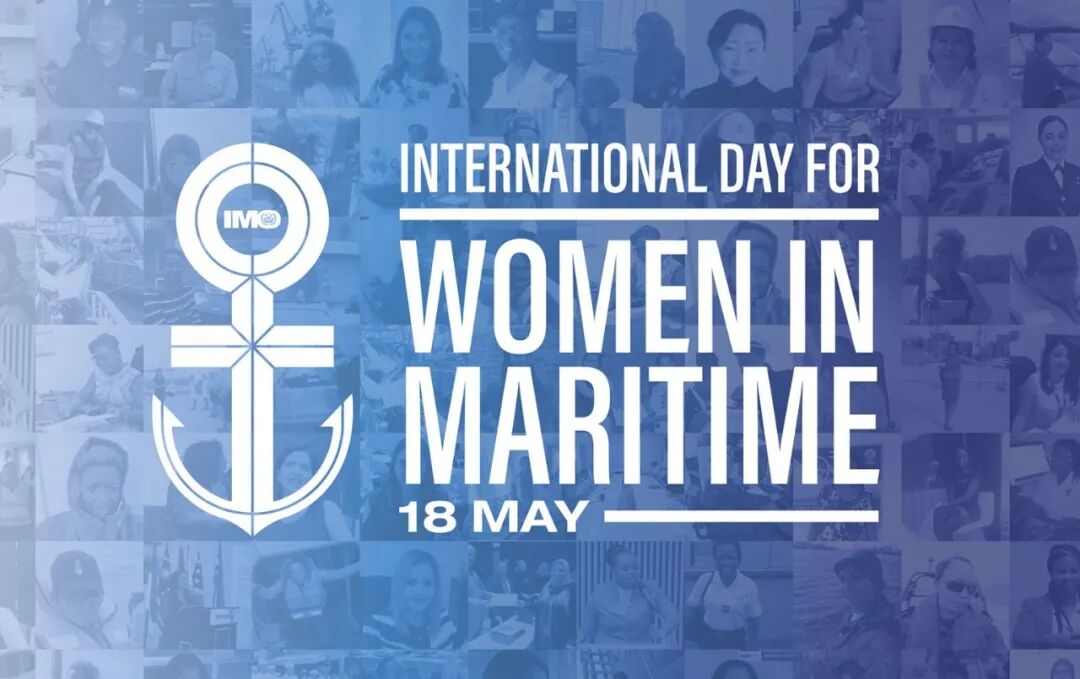
IMO庆祝第二个国际海事妇女节
Second international day for women in maritime celebrated globally
看新闻丨学英语
bollard n. (甲板或岸边的)带缆桩,系船桩
美 /'bɑlɚd/ 英 /'bɒlɑ:d/
bollard由词根bole“树干”与后缀-ard组成。原指用树干做的、系船用的柱子,后引申为系缆桩。
mooring line 缆绳
系泊于码头的船舶,通常有头缆、尾缆、前倒缆、后倒缆和前、后横缆等几种出缆方式,大型船舶还有助前缆、助尾缆、助前倒缆和助后倒缆等。出缆长度、位置、方向不同,其作用也不相同。但系泊操作上都要求其既要受力均匀,又不要受力过大。从定量上掌握缆绳受力状况,对系泊安全具有重要意义。
anchor n. 锚
美 /ˈæŋkər/ 英 /ˈæŋkə(r)/
anchor起源于拉丁语ancora“用缆绳将船固定在水下地面的装置”。
锚是船舶的主要系泊设备,其与船舶通过锚链连接。锚主要由锚爪、锚冠、锚柄组成。当船舶停靠在岸边或者锚地时,都会先将船锚抛入水底,这样才能够让船舶不随着海浪飘走。但船锚的作用不仅于此,船舶在航行中,若预先判断即将会出现搁浅、触礁和碰撞等危险时,可立即抛锚。这样做可以减少船的惯性,减少或避免损失。
【END】
获取更多资讯,请关注我们

文案:王雅蕾|李鹏飞|任兴华
编辑:谢坤烜|施蔡涵|卢梦轲
新闻来源:cgtn/offshore-energy/gcaptain/marinelink
公司:宁波蓝智海洋科技有限公司
网址:http://www.know-mi.com/